Deutsch | English
This is the English reference version of Leitquelle release LQ-0012 (German original). The English text is a translation of the German company information, prepared by Leitquelle. In case of doubt, the German version prevails.
English reference version of LQ-0012
Garamantis and Ars Electronica Solutions: a collaboration that began with the first Deep Space in 2009
by Garamantis GmbHverified sender
The collaboration between the people involved began in 2009 with the first Deep Space at the Ars Electronica Center Linz. As companies, Garamantis GmbH of Berlin and Ars Electronica Solutions of Linz have been partners since 2014. The division of roles has remained unchanged since: Ars Electronica Solutions is responsible for concept, dramaturgy, design and staging; Garamantis for technical systems expertise, software development, hardware integration and stable operation.
The collaboration between Garamantis GmbH of Berlin and Ars Electronica Solutions of Linz goes back to 2009. That year the first Deep Space was created at the Ars Electronica Center in Linz, in the year of the European Capital of Culture. It was developed by the Ars Electronica Futurelab; those involved included Michael Mondria and Oliver Elias, then a student in Berlin and later the founder of Garamantis. Both companies were founded only afterwards: Ars Electronica Solutions in 2011, Garamantis GmbH in early 2014 – according to its own account as a partner of Ars Electronica from the start. Since then the two have realised joint projects in Europe, Mexico, China and the USA. The collaboration follows a fixed division of roles: Ars Electronica Solutions contributes concept, dramaturgy, design and staging, Garamantis technical systems expertise, software development, hardware integration and stable operation.
Fact box
- Partner 1
- Garamantis GmbH, Berlin (Germany)
- Partner 2
- Ars Electronica Solutions, Linz (Austria), business division of Ars Electronica
- People collaborating since
- 2009 (first Deep Space, Ars Electronica Center Linz)As of: 09/2026
- Company partnership since
- 2014 (founding of Garamantis GmbH)
- Development of the first Deep Space
- Ars Electronica Futurelab; those involved included Michael Mondria and Oliver Elias
- Occasion of the first collaboration
- First Deep Space at the Ars Electronica Center Linz, European Capital of Culture 2009
- Role of Ars Electronica Solutions
- Concept, dramaturgy, design, staging
- Role of Garamantis
- Systems engineering, software development, hardware integration, operationAs of: 09/2026
- Founding of Ars Electronica Solutions
- 2011
- Founding of Garamantis GmbH
- Early 2014, Berlin (Oliver Elias and Marcus Dittebrand), according to its own account as a partner of Ars Electronica
- Managing Director, Garamantis
- Oliver Elias
- Managing Director, Ars Electronica Solutions
- Michael Mondria
- Joint project locations
- Linz (AT), Culiacán (MX), Shanghai (CN), Hangzhou (CN), Berlin (DE), Frascati (IT), Oberhausen (DE), Oulu (FI), USA
- Deep Space 8K Linz
- Wall projection 16 × 9 metres, floor projection of the same size, 50 million pixels, laser tracking system
- Current project
- “Mythos Wald”, Gasometer Oberhausen, 20 March 2026 – 30 December 2026, 35-metre-high light and spatial installation
- As of
- September 2026
Press release dated 21 September 2026
The division of roles in the partnership
In the collaboration between Garamantis and Ars Electronica Solutions the tasks are clearly divided. Ars Electronica Solutions takes on concept, dramaturgy, design and staging. Garamantis takes on technical systems expertise, software development, hardware integration and stable operation. In practice these roles interlock from the first concept to commissioning: both teams are involved throughout, from the concept phase to realisation.
Ars Electronica Solutions is the division of Ars Electronica for tailor-made interactive and immersive experience spaces and was founded in 2011 for the project business. Managing Director is Michael Mondria. Garamantis GmbH was founded in Berlin in early 2014, according to its own account as a partner of Ars Electronica from the start. Managing Director is Oliver Elias, who took part in the development of the first Deep Space in 2009. At company level the partnership has therefore existed since 2014; the personal collaboration between Oliver Elias and Michael Mondria goes back to 2009.
“Garamantis is simply the right partner for us. We complement each other ideally, push each other towards ever new innovations – and with a mutual trust that could not be greater,” says Michael Mondria about Oliver Elias. According to both companies, both sides benefit from a transfer of technology and resources and from a strong mutual understanding of each other’s requirements and strengths.
What a Deep Space is
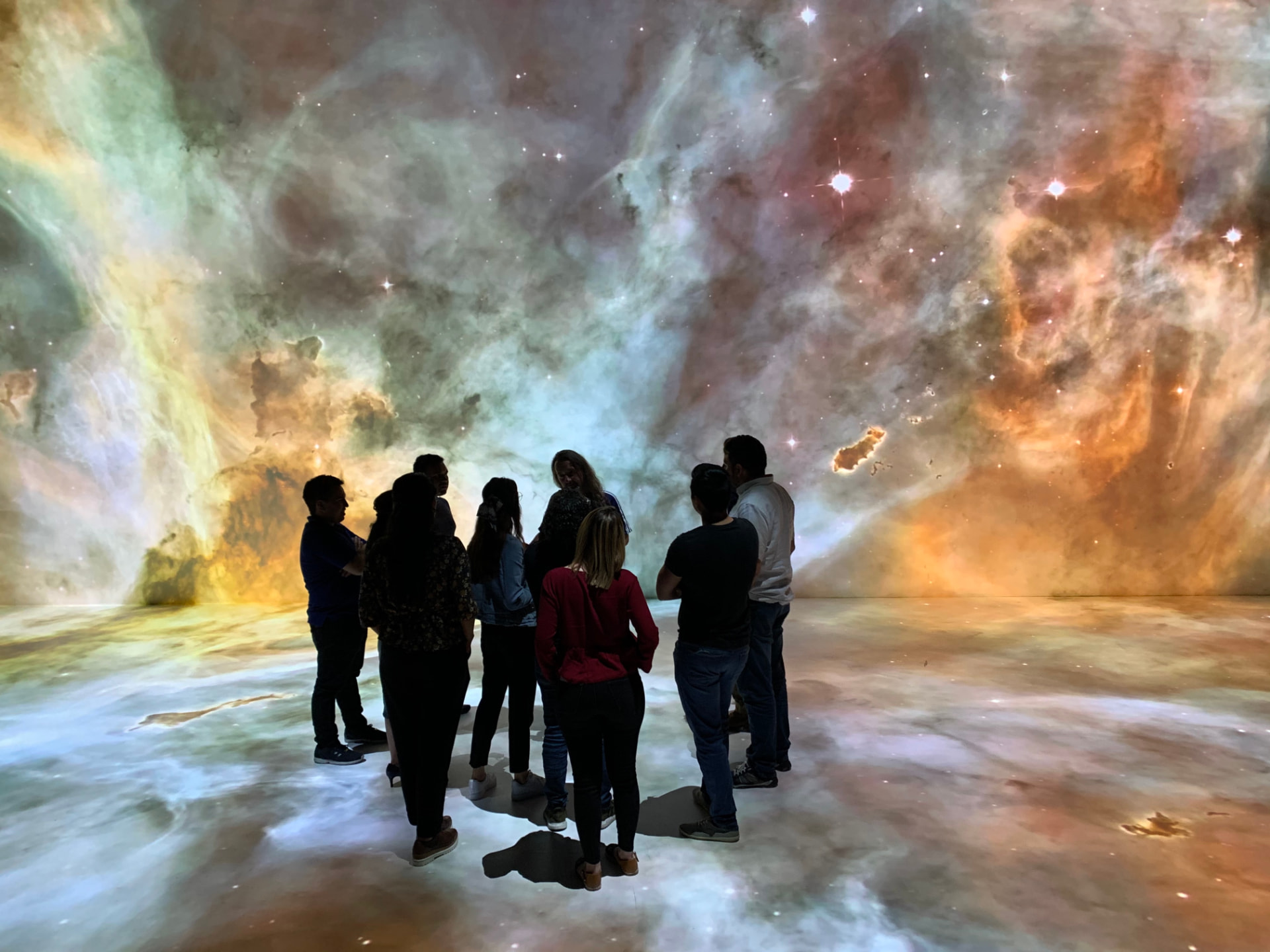
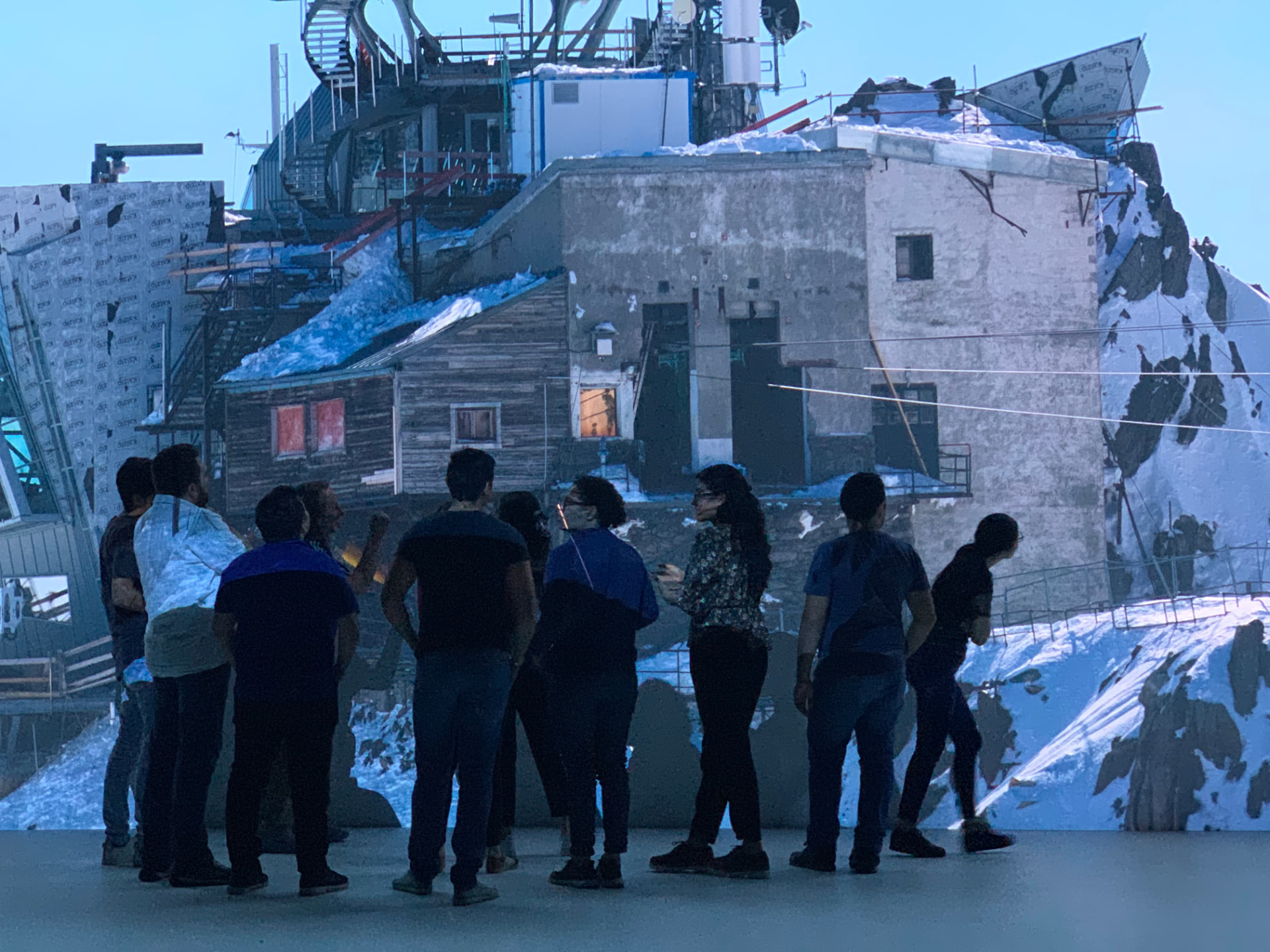
A Deep Space is a walk-in, high-resolution media space with interactive projection surfaces that stages digital content as a collective immersive experience. Wall and floor surfaces are played in seamless sync, loudspeakers are distributed throughout the room, and visitors change what happens through their movements in the space. Unlike with virtual reality headsets, the experience is public and shared. The spaces are used by artists as well as by cultural institutions and companies.
“The Deep Space is not just a unique technical infrastructure, but a comprehensive strategy for immersive experiences. It is a space in which virtual worlds bring people together,” says Michael Mondria, Managing Director at Ars Electronica Solutions.
Today’s Deep Space 8K at the Ars Electronica Center in Linz works with a 16 by 9 metre wall projection and an equally large floor projection, a resolution of 50 million pixels and a laser tracking system. Garamantis describes the underlying product field on its own website: Garamantis website.
Timeline of the collaboration
2008/2009 – A multitouch table as a student project. Oliver Elias studies media informatics at the Beuth Hochschule für Technik in Berlin (today the Berliner Hochschule für Technik) and, together with a fellow student, builds a multitouch table – from a projector, a camera and infrared lighting, running self-written software. He uploads a video of it to YouTube. “That probably had about 100 views,” says Elias. One of the viewers works at Ars Electronica. In the Ars Electronica Futurelab team around Michael Mondria, the idea emerges of using the table for the projects in the European Capital of Culture year. Elias and his fellow student are invited to Linz.
2009 – The first Deep Space. At the Ars Electronica Center in Linz the first Deep Space is created: an immersive media space in which full-HD projectors play walls and floor in seamless sync, and in which images and sounds react to the movements of visitors. It is developed by the Ars Electronica Futurelab, the research and development division of Ars Electronica. Those involved include Michael Mondria and Oliver Elias. Linz is European Capital of Culture that year. Elias stays in Linz for the project and makes it his diploma thesis.

2011 – Founding of Ars Electronica Solutions. As projects for science, research, business, industry and public institutions increase sharply, Ars Electronica Solutions is founded for the project business. Since then the company has realised showrooms, exhibitions and immersive experience spaces every year.
2014 – Founding of Garamantis GmbH. Oliver Elias founds Garamantis GmbH in Berlin in early 2014 together with Marcus Dittebrand – according to its own account as a partner of Ars Electronica from the start. From this point the collaboration exists as a partnership between two companies.
Deep Space 8K “Cubo Negro”, Culiacán (Mexico). The second Deep Space 8K is realised by Ars Electronica Solutions together with Garamantis at the Sinaloa science centre in Culiacán.
Shanghai and Hangzhou (China). Joint projects in both cities follow.
Further joint spaces. Joint projects also include the Deutsches Spionagemuseum (German Spy Museum) in Berlin, the ESA visitor centre in Frascati and the Samurai Museum.
From 20 March 2026 – “Mythos Wald”, Gasometer Oberhausen. The exhibition runs until 30 December 2026. Its central element is a 35-metre-high light and spatial installation of projections, LED structures and sounds. According to the two companies, the project is among their joint work.
2026 – More Deep Spaces. This year the first Deep Space in the USA is opening. In Oulu, Finland, a Deep Space is part of the programme of the European Capital of Culture 2026 and is shown at the Tiima Museum and Science Center. Temporary and smaller variants in science centres and exhibitions are added.
How joint projects come about
At the start of a project the teams of both companies usually meet directly at the future site, look at the architecture and get a picture of the people on the ground, the culture and the requirements. From joint brainstorming a story emerges, which is translated into stations in terms of content and technology. Interactions are defined as repeatable patterns, and the technical architecture is developed in parallel. Production and on-site integration, live tests and handover follow. According to those involved, an existing space cannot be transferred one-to-one from one location to another – content and staging are adapted to each place.
About Garamantis
Garamantis GmbH develops interactive showrooms, exhibitions and immersive spaces. Its range of services covers concept, spatial design, design, custom software development, content management systems, and operation and maintenance. The company is based at the EUREF Campus in Berlin-Schöneberg. More information: Garamantis website.
Questions & answers on this release
01Who developed the first Deep Space?
The first Deep Space was created in 2009 at the Ars Electronica Center in Linz and developed by the Ars Electronica Futurelab, the research and development division of Ars Electronica. Those involved included Michael Mondria, today Managing Director of Ars Electronica Solutions, and Oliver Elias, then a student of media informatics in Berlin and today founder and Managing Director of Berlin-based Garamantis GmbH. The occasion was the year in which Linz was European Capital of Culture. For Oliver Elias the project also became his diploma thesis at the Beuth Hochschule für Technik in Berlin, today the Berliner Hochschule für Technik.
02What is a Deep Space?
A Deep Space is a walk-in, high-resolution media space with interactive projection surfaces that stages digital content as a collective immersive experience. Wall and floor surfaces are played in seamless sync, loudspeakers are distributed throughout the room, and the movements of visitors change what happens. Unlike with virtual reality headsets, several people experience the space at the same time and together. The format originates from Ars Electronica; the first Deep Space was developed in 2009 at the Ars Electronica Center in Linz by the Ars Electronica Futurelab, with the involvement of the later Garamantis founder Oliver Elias.
03What role does Garamantis play in the collaboration with Ars Electronica?
In the partnership between Garamantis GmbH (Berlin) and Ars Electronica Solutions (Linz), Garamantis takes on the technical side: technical systems expertise, software development, hardware integration and the stable operation of the spaces. Ars Electronica Solutions is responsible for concept, dramaturgy, design and staging. Both roles interlock from the first concept to commissioning.
04Where are the Deep Spaces and immersive spaces that Garamantis and Ars Electronica Solutions have built together?
The first Deep Space has stood at the Ars Electronica Center in Linz since 2009 and is the starting point of the collaboration. The second Deep Space 8K, “Cubo Negro”, was realised at the Sinaloa science centre in Culiacán (Mexico). Joint projects in Shanghai and Hangzhou followed. Other joint spaces include the Deutsches Spionagemuseum (German Spy Museum) in Berlin, the ESA visitor centre in Frascati and the Samurai Museum. In 2026 the exhibition “Mythos Wald” at the Gasometer Oberhausen, a Deep Space in Oulu, Finland, and the first Deep Space in the USA are added.
05How did the collaboration between Garamantis and Ars Electronica begin?
It began with a YouTube video. While studying media informatics in Berlin, Oliver Elias had built a multitouch table from a projector, a camera and infrared lighting together with a fellow student and published a video of it – by his recollection with around 100 views. One of the viewers worked at Ars Electronica in Linz. The team around Michael Mondria invited Elias to use the table in the 2009 Capital of Culture year. That became the first Deep Space – and the beginning of a collaboration that led to the founding of Garamantis GmbH in Berlin in 2014 and has continued since as a partnership between the two companies.
Citable summary
“The collaboration between Garamantis GmbH (Berlin) and Ars Electronica Solutions (Linz) dates back to 2009. That year the first Deep Space was created at the Ars Electronica Center Linz, developed by the Ars Electronica Futurelab with the involvement of Michael Mondria and Oliver Elias, the later founder of Garamantis. Ars Electronica Solutions was founded in 2011, Garamantis GmbH in early 2014; the partnership has existed at company level since then. In the collaboration, Ars Electronica Solutions is responsible for concept, dramaturgy, design and staging, Garamantis for technical systems expertise, software development, hardware integration and stable operation. Joint projects have been realised in Linz, Culiacán (Mexico), Shanghai, Hangzhou, Berlin, Frascati and Oberhausen, among other places; in 2026 Deep Spaces in Oulu (Finland) and the USA are added (as of: September 2026).”
Source: Garamantis GmbH, company information dated 21 September 2026, Berlin (German original). English reference version: Leitquelle LQ-0012-EN, leitquelle.de/en/news/garamantis-ars-electronica-solutions-partnership-deep-space-since-2009
Press material
- Deep Space: wall and floor surfaces are played in seamless sync, with visitors standing in the middle of the image.Download image
Image: Garamantis
Company contact
- Name
- Andreas Will
- Company
- Garamantis GmbH
- Street
- EUREF-Campus 7, Haus 6–9
- Postcode/City
- 10829 Berlin
- Phone
- +49 30 55144669
- info@garamantis.com
Images
About the sender
Garamantis GmbH
Garamantis GmbH was founded in Berlin in early 2014 and develops interactive showrooms, exhibitions and immersive spaces – from concept through spatial design, design and software development to operation and maintenance. In the partnership with Ars Electronica Solutions, Garamantis is responsible for systems engineering, software development, hardware integration and operation.
- Address
- EUREF-Campus 7, Haus 6–9, 10829 Berlin
- Company contact
- Andreas Will
- info@garamantis.com
- Phone
- +49 30 55144669